
Bone Health
Candace Cooley has carried out DEXA bone density evaluations, and the entries in this index explain what that test measures and why bone matters in a woman’s middle and later years. The National Institute on Aging calls osteoporosis a silent disease, one that often goes unnoticed until a bone breaks, usually in the hip, spine or wrist; it develops when more bone is broken down than replaced, and it affects about one in five women over 50 compared with one in 20 men. The institute adds that at the time of menopause women may lose bone mass quickly for several years.1
Measurement is the subject of most of the entries. MedlinePlus describes the DEXA scan as a low dose X ray that measures calcium and other minerals in bone, used to diagnose osteopenia and osteoporosis, to predict the risk of future fractures and to see whether treatment is working.2 The result arrives as a score. The National Institute of Arthritis and Musculoskeletal and Skin Diseases explains that a T score compares bone density with that of a healthy young adult and is used after menopause, while a Z score compares it with the average for people of the same age, sex and ethnicity and is used for younger women.3
The five entries are Osteoporosis, Dual Energy X Ray Absorptiometry, Osteoporosis Screening, T Scores and Z Scores and Bone and the Menopause Transition.
- National Institute on Aging, Osteoporosis
- MedlinePlus, US National Library of Medicine, Bone Density Scan
- National Institute of Arthritis and Musculoskeletal and Skin Diseases, Bone Mineral Density Tests: What the Numbers Mean
Entries in this subject
- Bone Health
Bone and the Menopause Transition
A lifetime of bone has a turning point, and it arrives with the final years of menstrual cycles.
-
 Bone Health
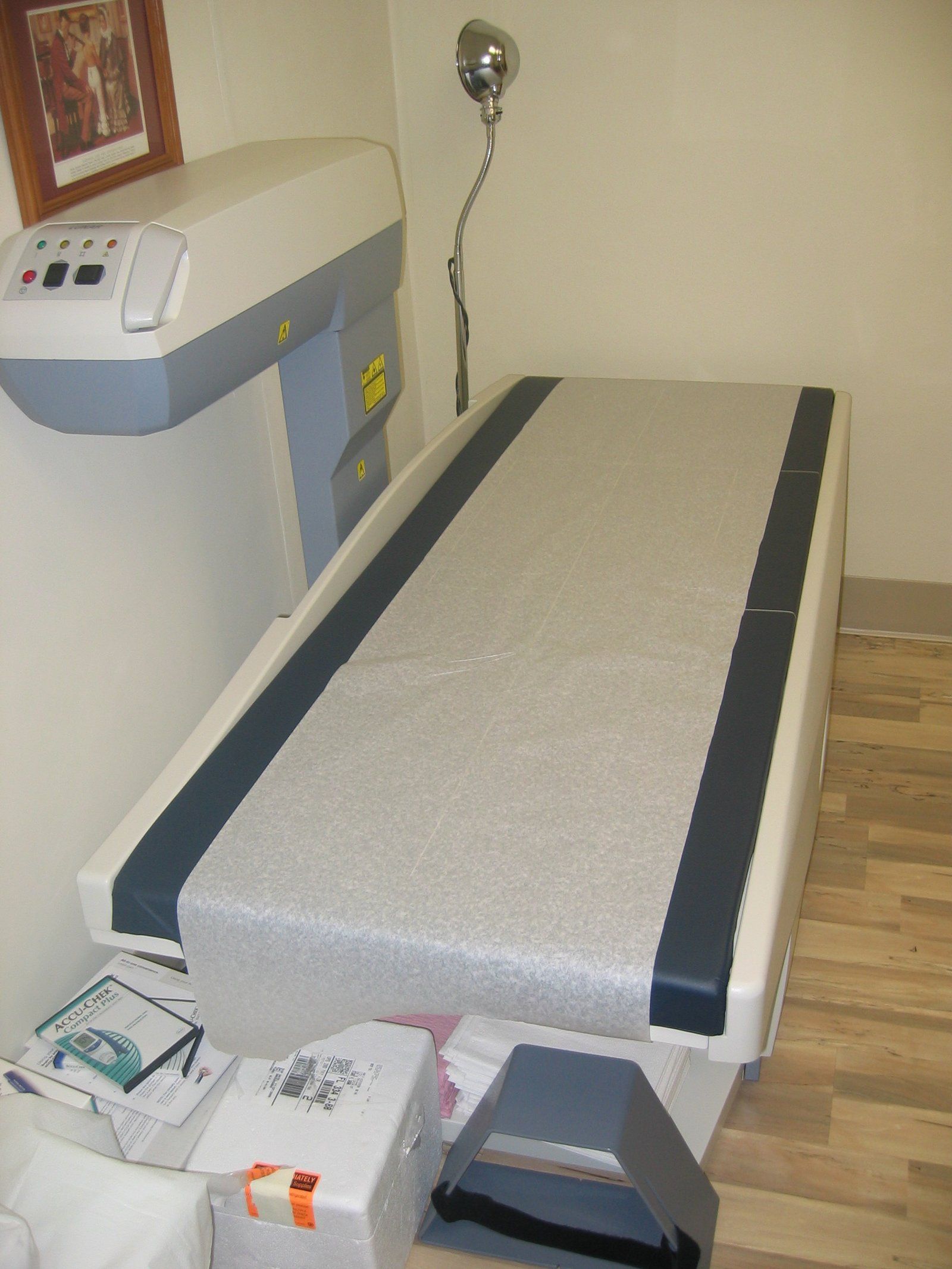
Dual Energy X Ray Absorptiometry
The low dose X ray test behind nearly every bone density number, explained from the table to the report.
- Bone Health
Osteoporosis
The quiet thinning of the skeleton, from the honeycomb inside a bone to the fracture that reveals it.
- Bone Health
Osteoporosis Screening
The rules that decide which bones get measured, and how they moved from an age line toward a reading of risk.
- Bone Health
T Scores and Z Scores
Two numbers on every bone scan report, each measured against a different reference group.