
Gynecologic Surgery
Candace Cooley’s operating experience takes in hysterectomy by vaginal and abdominal approaches, laparoscopic surgery and hysteroscopy, and this index gathers the entries on those operations and their history. The Office on Women’s Health defines hysterectomy as surgery to remove the uterus, sometimes with the fallopian tubes and ovaries, and lists fibroids, heavy or unusual bleeding, uterine prolapse, endometriosis, adenomyosis and cancer among the reasons for it, alongside other treatments that may be tried first.1
Smaller procedures look inside rather than remove. The NHS describes hysteroscopy as passing a thin tube with a small camera into the womb to find the cause of symptoms such as unexplained bleeding, and notes that polyps and fibroids can be removed and tissue samples taken during it.2 All of this rests on anesthesia, which is younger than it seems. The College of Physicians of Philadelphia recounts that before ether surgeons almost never operated on the chest or abdomen, and that the dentist T. G. Morton used ether during a surgical demonstration at Harvard Medical School in 1846, after which it spread through America and Europe.3
The four entries are The Hysterectomy, Hysteroscopy and Endometrial Polyps, From Ether to Enhanced Recovery and Laparoscopy, From Kurt Semm to Robotic Systems.
- Office on Women's Health, US Department of Health and Human Services, Hysterectomy
- NHS, Hysteroscopy
- The College of Physicians of Philadelphia, History of Medicine, Ether in Surgery
Entries in this subject
-
 Gynecologic Surgery
From Ether to Enhanced Recovery
Two turning points in carrying a patient through an operation, a century and a half apart.
- Gynecologic Surgery
Hysteroscopy and Endometrial Polyps
A thin scope, a little fluid and a camera: the procedure that lets a gynecologist see and treat the uterine lining.
-
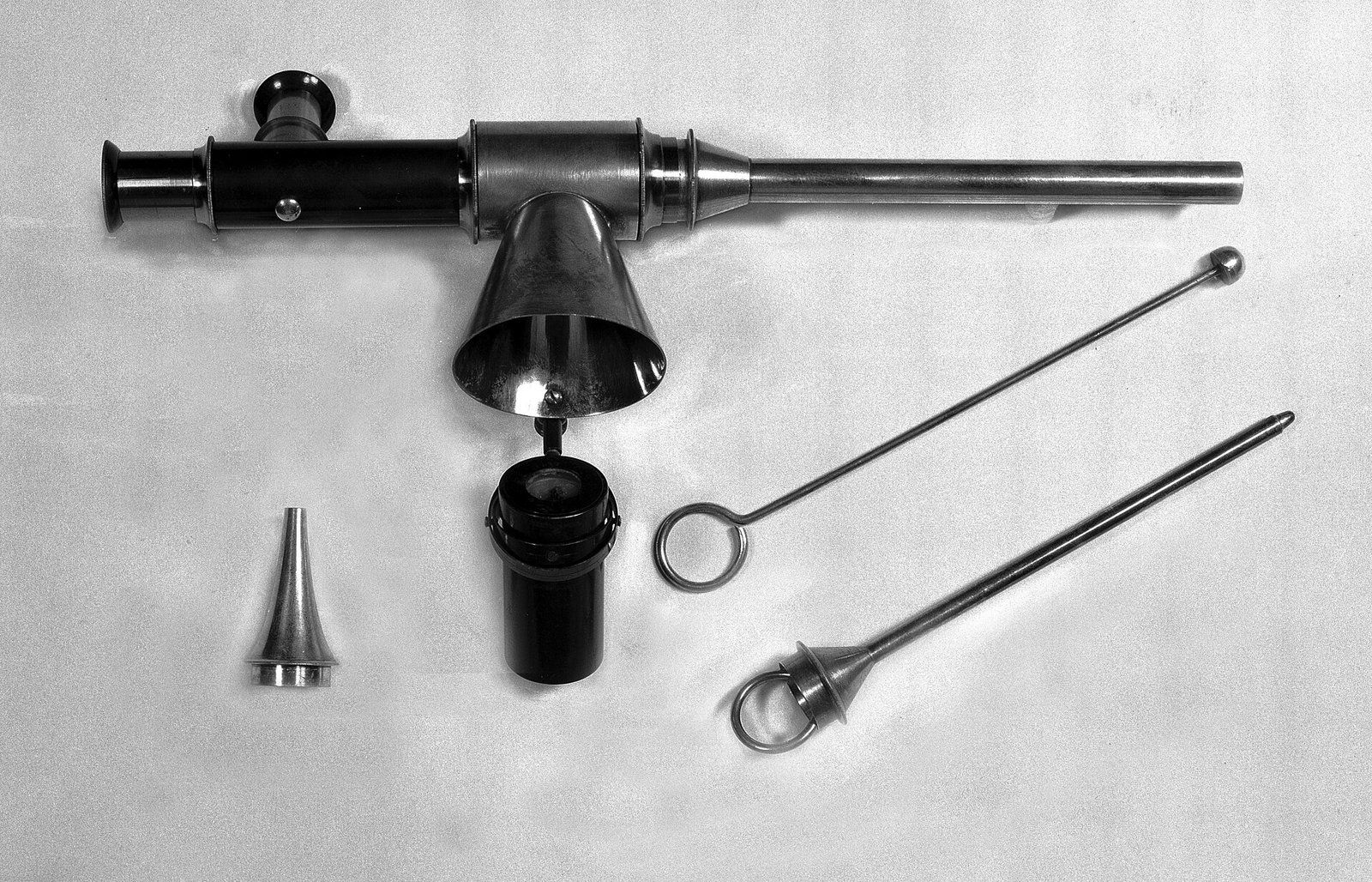 Gynecologic Surgery
Laparoscopy, From Kurt Semm to Robotic Systems
Kelling, Jacobaeus, Palmer and the Kiel gynecologist who operated through a scope while colleagues scoffed, then the robots that came after.
- Gynecologic Surgery
The Hysterectomy
Removal of the uterus, from the long open incision to keyhole and robotic routes, with the numbers, the name and the open questions.